How Many Holy Books in Islam?
How Many Holy Books in Islam?
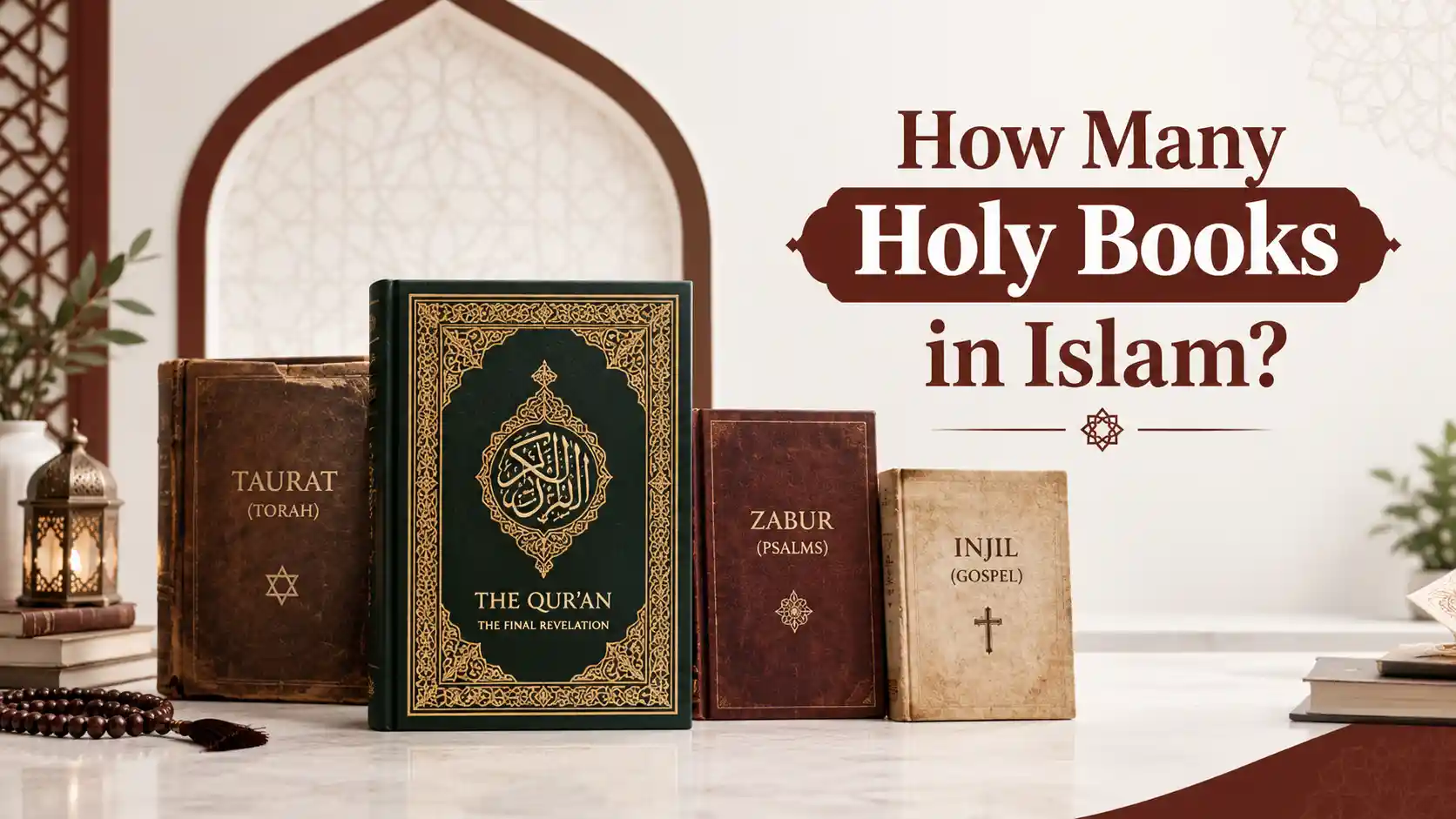
Islam names 4 holy books by title in the Quran: the Tawrat (Torah), the Zabur (Psalms), the Injeel (Gospel), and the Quran itself. It also confirms that Allah revealed scriptures to other prophets, including the Suhuf (Scrolls) of Ibrahim, without giving a total count. The exact number of divine books is unknown, since Allah sent prophets and scriptures whose names and details He did not disclose. What is known, and what this guide covers, is each named scripture, the prophet who received it, and what Islamic belief says about its current status.
Why Belief in Divine Books Matters
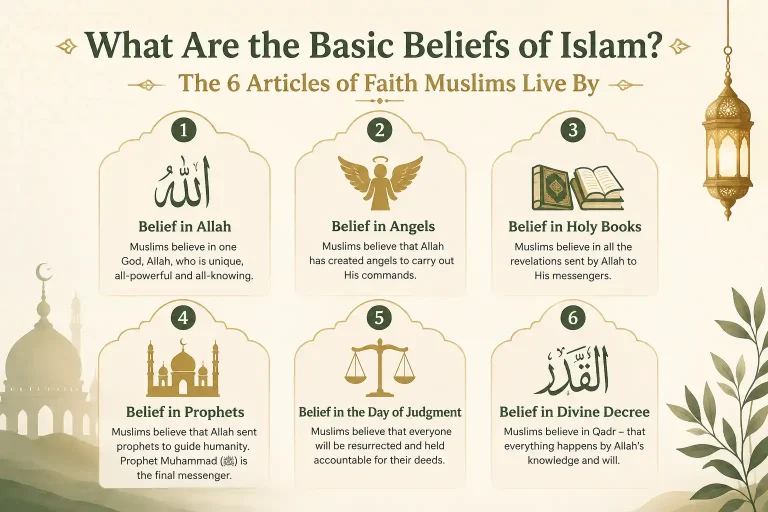
Belief in Allah’s revealed books is one of the 6 articles of Islamic faith, listed directly alongside belief in Allah, His angels, His messengers, the Day of Judgment, and divine decree. The verse that places this belief at the center of what defines a Muslim reads:
ءَامَنَ الرَّسُولُ بِمَا أُنزِلَ إِلَيْهِ مِن رَّبِّهِ وَالْمُؤْمِنُونَ ۚ كُلٌّ ءَامَنَ بِاللَّهِ وَمَلَائِكَتِهِ وَكُتُبِهِ وَرُسُلِهِ
“The Messenger firmly believes in what has been revealed to him from his Lord, and so do the believers. They all believe in Allah, His angels, His Books, and His messengers.” (Quran 2:285)
This belief carries a specific shape: Muslims accept every scripture Allah ever revealed, in its original form, while recognizing that only one of them, the Quran, remains preserved as it was first delivered.
The Named Scriptures in Islam
| Scripture | Arabic Name | Prophet | Current Status |
| Torah | Tawrat | Musa (Moses) | Original text altered (tahrif) |
| Psalms | Zabur | Dawud (David) | Original text no longer available |
| Gospel | Injeel | Isa (Jesus) | Original text altered; distinct from the New Testament |
| Quran | Al-Quran | Muhammad ﷺ | Preserved in its original Arabic, unchanged |
| Scrolls | Suhuf | Ibrahim (Abraham) and Musa | Lost entirely |
The Tawrat (Torah)
Prophet Musa (Moses, peace be upon him) received the Tawrat as a complete legal code for the Children of Israel: guidance, light, and detailed rulings for how they were to live. It is described directly:
إِنَّا أَنزَلْنَا التَّوْرَاةَ فِيهَا هُدًى وَنُورٌ
“Indeed, We revealed the Torah, in which was guidance and light.” (Quran 5:44)
Muslims do not equate the Tawrat with the Old Testament as it exists today. Islamic scholarship holds that the original text was altered over time, a concept known as tahrif. What remains in current Jewish and Christian scripture may contain fragments of the original, but it is no longer treated as a reliable, unaltered source of divine law.
The Zabur (Psalms)
The word zabur comes from a root meaning “to write,” and this scripture arrived in a form unlike the others: hymns, songs, and expressions of praise directed at Allah alone. It was given to Prophet Dawud (David, peace be upon him), and its revelation is confirmed in a single, direct statement:
وَآتَيْنَا دَاوُودَ زَبُورًا
“And to Dawud We gave the Zabur.” (Quran 4:163)
Like the Tawrat, the original Zabur is no longer available in its revealed form. The Book of Psalms in the Hebrew Bible shares some thematic overlap, particularly in its praise of Allah and its call to worship Him alone. Still, Islamic scholarship does not treat the two as identical texts.
The Injeel (Gospel)
Where the Tawrat laid down law, and the Zabur turned worship into song, the Injeel carried both forward. It was given to Prophet Isa (Jesus, peace be upon him), confirming the Tawrat that came before it and adding its own layer of guidance:
وَقَفَّيْنَا عَلَىٰ آثَارِهِم بِعِيسَى ابْنِ مَرْيَمَ مُصَدِّقًا لِّمَا بَيْنَ يَدَيْهِ مِنَ التَّوْرَاةِ ۖ وَآتَيْنَاهُ الْإِنجِيلَ فِيهِ هُدًى وَنُورٌ
“And We sent, following in their footsteps, Isa son of Maryam, confirming that which came before him of the Torah; and We gave him the Injeel, in which was guidance and light.” (Quran 5:46)
The Injeel is distinct from the New Testament. The 4 Gospels of Matthew, Mark, Luke, and John are biographical accounts written by authors after Isa’s (peace be upon him) departure. The Injeel, by contrast, was a direct revelation given to Isa himself. Islamic scholarship treats them as separate texts, not different names for the same document.
The Quran
The final revelation came to Prophet Muhammad ﷺ through the Angel Jibril (Gabriel), delivered across roughly 23 years rather than all at once. It doesn’t simply repeat what the earlier scriptures said. It confirms what remained true in them, corrects what had been changed, and holds final authority over all of them:
نَزَّلَ عَلَيْكَ الْكِتَابَ بِالْحَقِّ مُصَدِّقًا لِّمَا بَيْنَ يَدَيْهِ وَأَنزَلَ التَّوْرَاةَ وَالْإِنجِيلَ مِن قَبْلُ هُدًى لِّلنَّاسِ وَأَنزَلَ الْفُرْقَانَ
“He sent down to you the Book in truth, confirming what came before it. And He revealed the Torah and the Gospel previously as guidance for the people. And He sent down the Criterion.” (Quran 3:3-4)
Allah Himself guaranteed the Quran’s preservation in a verse no other scripture received:
إِنَّا نَحْنُ نَزَّلْنَا الذِّكْرَ وَإِنَّا لَهُ لَحَافِظُونَ
“Indeed, it is We who sent down the reminder, and indeed, We will be its guardian.” (Quran 15:9)
No earlier scripture received that guarantee. The Tawrat, Zabur, and Injeel were entrusted to human communities for safekeeping, and over time, that trust was not maintained. The Quran was placed under Allah’s own protection. Reading the Quran in its original Arabic, rather than through translation alone, is where this precision becomes most apparent.
Arabic classes for busy adults at Kitaab Academy build exactly that reading ability, through a structured 7-level curriculum moving from the alphabet to independent comprehension of the text.
The Suhuf: Scriptures Mentioned but Not Fully Detailed
Beyond the 4 named books, the text refers to the Suhuf (Scrolls) of Ibrahim (Abraham) and Musa (Moses):
إِنَّ هَٰذَا لَفِي الصُّحُفِ الْأُولَىٰ صُحُفِ إِبْرَاهِيمَ وَمُوسَىٰ
“Indeed, this is in the former scrolls: the scrolls of Ibrahim and Musa.” (Quran 87:18-19)
These scrolls are mentioned by name, but their contents are not preserved or detailed in the Quran. Islamic scholarship treats them as genuine divine revelation, now lost entirely.
Is the Total Number of Divine Books 104?
A widely circulated claim puts the number at 104, based on a hadith attributed to Abu Dharr al-Ghifari. The narration describes 50 scrolls sent to Sheeth (Seth), 30 to Idris (Enoch), 10 to Ibrahim, and 10 to Musa before the Tawrat, in addition to the Tawrat, Zabur, Injeel, and Quran.
This hadith was narrated through Ibrahim ibn Hisham al-Ghassani in Sahih Ibn Hibban, and through other chains recorded by al-Tabari and al-Hakim. All of them carry serious weaknesses:
- Abu Hatim al-Razi, one of the most respected hadith critics in Islamic history, personally examined Ibrahim ibn Hisham and concluded he was untrustworthy.
- Abu Zur’ah, another leading critic, called him a liar outright.
- Ibn Kathir noted that more than one major scholar spoke out against this narrator specifically because of this hadith.
- Ibn Rajab al-Hanbali summarized the situation: “It was narrated from Abu Dharr via several chains of narration, all of which are not free of problems.”
The correct position, according to mainstream scholarship, is that the total number of divine books is known only to Allah. Muslims believe in all of them in general terms, and in the specific ones the Quran names by title.
What Happened to the Earlier Scriptures?
Islamic theology uses the term tahrif (alteration) to describe what happened to the scriptures revealed before the Quran. This tahrif took several forms:
Tahrif al-Lafz (Alteration of Wording)
Some passages were physically rewritten or rearranged over time. This is addressed directly in multiple verses, describing people who “distort words from their proper usages” (Quran 5:13).
Tahrif al-Ma'na (Alteration of Meaning)
Even where original wording survived, its meaning was sometimes reinterpreted in ways the revelation never intended. A verse meant literally was read figuratively, or a ruling meant for a specific situation was applied universally.
Loss and Forgetting
Parts of earlier scriptures were lost or forgotten over generations. The Quran describes communities who “forgot a portion of that of which they were reminded” (Quran 5:14).
This is why Muslims respect the earlier revelations as originally divine without treating their current forms as reliable sources of law or creed. The final revelation calls itself “muhaymin” over previous scriptures (Quran 5:48), meaning it acts as a guardian and criterion: confirming what remains true in them and correcting what has been changed.
What All Divine Books Share
espite the differences in their audiences and time periods, every revealed scripture shared the same foundational message:
- Tawhid: there is only one God, and worship belongs to Him alone.
- Prophethood: Allah sent messengers to guide people, and those messengers should be followed.
- Accountability: every person will answer for their actions on the Day of Judgment.
- Moral guidance: justice, honesty, charity, and restraint are commanded; oppression, dishonesty, and excess are forbidden.
The final scripture presents itself as both confirming and superseding the earlier texts, a relationship that a peer-reviewed analysis of scripture and revelation in the Quran, published in Brill’s Studies in Islamic Civilization series, traces in detail. The Arabic term “musaddiqan lima bayna yadayhi” (confirming what came before it) captures that relationship precisely. Readers looking to explore the classical Tafsir, hadith sciences, and Arabic behind these terms at their own pace will find them covered in the self-paced Kitaab Library.
Frequently Asked Questions
How many holy books are there in Islam?
The Quran names 4 by title: the Tawrat, Zabur, Injeel, and the Quran itself. It also mentions the Suhuf of Ibrahim and Musa. Additional scriptures were sent to prophets whose details Allah did not disclose, so no total count exists.
Why is the Quran considered different from the other divine books?
It’s the only scripture whose preservation Allah personally guaranteed, as described in the Quran section above (Quran 15:9). The earlier books were entrusted to human communities instead, and that trust was not maintained over time.
Can Muslims read the Bible or the Torah?
Islamic scholars differ on this. The general caution is that since the current texts have undergone tahrif, reading them for guidance carries a risk of absorbing altered content. Some scholars permit reading them for comparative study or da’wah purposes, provided the reader can distinguish altered content from what aligns with revealed guidance.
Is the Injeel the same as the New Testament?
No. The Injeel was a direct revelation given to Isa (peace be upon him). The New Testament contains biographical accounts written by later authors about his life and teachings. Islamic scholarship treats them as separate texts.
Why didn't Allah preserve the earlier scriptures the way He preserved the Quran?
Islamic scholarship explains this through the concept of abrogation and finality. Each earlier scripture was sent for a specific community and era, and was eventually superseded by the next revelation. The Quran, as the final scripture meant for all of humanity until the Day of Judgment, was the one Allah chose to place under His own protection.
What does tahrif mean?
Tahrif is the Arabic term for the alteration that Islamic theology attributes to earlier scriptures. It covers physical changes to the text (tahrif al-lafz), reinterpretation of meaning (tahrif al-ma’na), and outright loss or forgetting of passages over time.